
Waiting 30+ minutes at a charging station isn't exactly thrilling. Chinese automaker NIO decided to skip that problem entirely with their NIO battery swap technology, a system that replaces depleted EV batteries with fully charged ones in roughly three to five minutes. It's a fundamentally different approach to keeping electric vehicles on the road.
At Wave-Vo, we built our electric jet boats around the same principle. Our hot-swap battery system lets riders swap power packs in about 10 seconds, eliminating downtime on the water. So when it comes to battery swapping technology, we've studied what works and what doesn't. NIO's infrastructure represents the largest deployment of this concept in the automotive world.
This guide breaks down how NIO's battery swap stations operate, what it costs drivers, the current network coverage, and whether swapping actually beats traditional charging for everyday use.
What NIO battery swap is
NIO battery swap is an automated service where robotic systems physically remove your depleted battery pack and install a fully charged replacement in under five minutes. You drive into a station, park your vehicle, and let machinery handle the entire exchange while you wait in the car. The removed battery gets recharged at the station for the next driver.
The core technology behind the swap
Each NIO Power Swap Station contains multiple pre-charged battery packs stored in climate-controlled compartments. When you arrive, the station's software identifies your vehicle model and battery type through wireless communication protocols. A lift mechanism raises your car, automated tools disconnect the depleted pack's electrical and cooling connections, then slide it out from beneath the chassis.
The system reverses this process with a charged pack, reconnecting all systems and lowering your vehicle back to ground level. The entire operation runs without human intervention. NIO designed their vehicles with standardized battery mounting points and connection interfaces specifically to enable this quick-swap capability.
"Battery swapping eliminates the gap between refueling a gas car and charging an electric one."
How swapping differs from traditional charging
Traditional EV charging pumps electricity into your existing battery through a cable connection, which takes 20 to 40 minutes at fast-charging stations or several hours at home outlets. You're stuck waiting for chemical reactions inside your battery cells to accept and store energy. Temperature, battery age, and state of charge all affect how quickly your pack can absorb power.
Swapping sidesteps this entirely by treating batteries as interchangeable components rather than permanent fixtures. You never own a specific battery pack under NIO's Battery as a Service (BaaS) model. Instead, you rotate through the station's inventory of maintained, tested packs. This approach shifts battery degradation concerns away from individual owners onto NIO's maintenance operations, similar to how propane tank exchanges work for gas grills.
The technology requires significant infrastructure investment and vehicle design compromises, but it delivers the closest experience EVs currently have to a traditional gas station fill-up.
Why battery swapping matters for EV drivers
You face a simple problem with most EVs: charging takes time you'd rather spend driving. NIO battery swap technology addresses this by cutting your refueling stop from 30 minutes to 5 minutes, which fundamentally changes how you plan road trips and daily routines. The difference becomes critical when you're on a schedule or driving through areas with limited fast-charging infrastructure.
Time savings compared to traditional charging
Traditional DC fast charging requires you to wait while electricity flows into your battery pack at rates limited by heat management and battery chemistry. Even the fastest Tesla Superchargers need 20 to 30 minutes to reach 80% capacity on recent models. Swapping eliminates this waiting period entirely because you're receiving a pre-charged pack that's been optimized at the station under controlled conditions.
"Five-minute swaps deliver the same experience as filling a gas tank, which removes range anxiety from the equation."
Flexibility for long-distance travel
Battery degradation becomes someone else's problem under NIO's subscription model. Your vehicle rotates through the station's inventory of maintained packs, so you're not stuck with a seven-year-old battery that charges slower and holds less capacity. This approach works especially well for drivers who rack up high annual mileage, since you avoid the performance decline that typically hits personal battery packs after 100,000+ miles of use. Road trips also become more predictable when you can plan routes around swap stations instead of gambling on available charging stalls at rest stops.
How NIO battery swapping works step by step
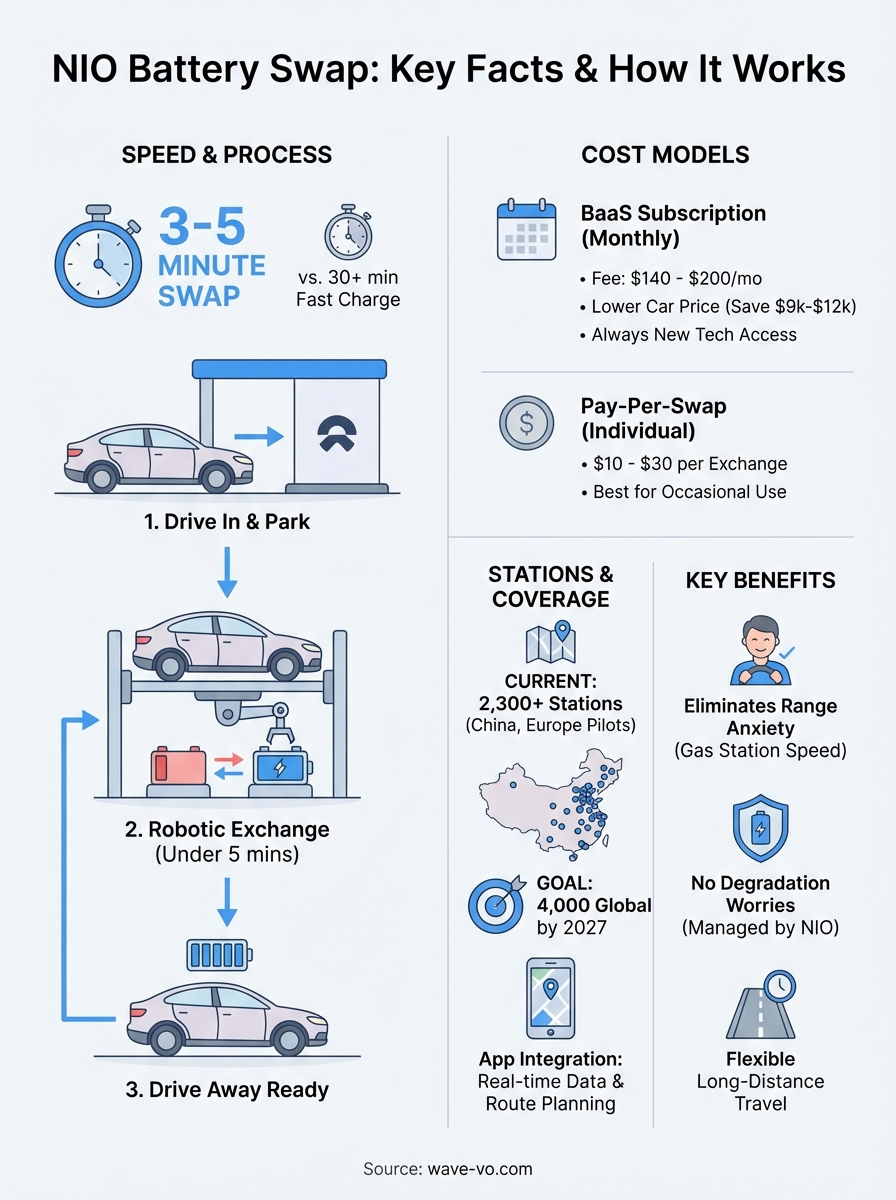
The actual swap process runs through five automated stages that require minimal action from you. You drive in, confirm your vehicle details through the app, and wait while machinery handles the battery exchange. The entire sequence takes three to five minutes from arrival to departure, depending on station traffic and battery pack availability.
The arrival and verification process
You start by locating an available swap station through NIO's mobile app, which shows real-time data on wait times and charged battery inventory. Once you arrive, you drive your vehicle into the designated bay and shift into park. The station's sensors scan your vehicle identification number and confirm your subscription status or payment method through wireless communication.
After verification, robotic positioning guides display on your dashboard to help you align your vehicle correctly over the lift platform. You don't need to exit the car. The system locks your doors and activates the parking brake automatically before beginning the swap.
The automated swap sequence
Hydraulic lifts raise your vehicle approximately 12 inches off the ground while support arms stabilize the chassis. Robotic tools disconnect your battery pack's electrical connectors, cooling lines, and mounting bolts in a pre-programmed sequence. A sliding mechanism pulls the depleted pack out from beneath your vehicle and transfers it to a charging bay inside the station.
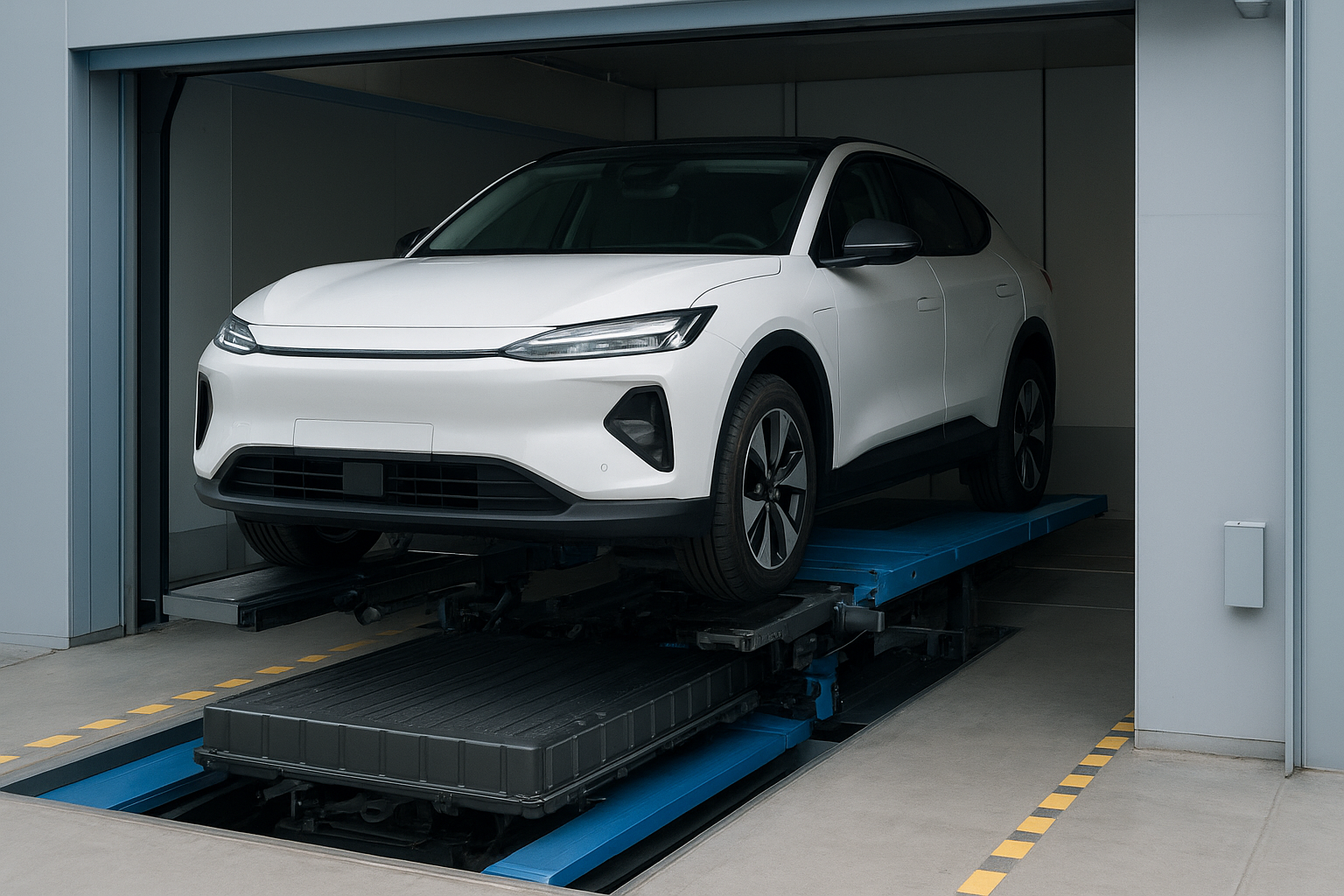
"The entire mechanical process happens beneath your vehicle while you sit in the driver's seat."
The system then retrieves a fully charged pack, slides it into position, and reconnects all systems. Lifts lower your vehicle, the doors unlock, and you receive confirmation through the dashboard display. The nio battery swap station logs the transaction to your account, and you drive away with a fresh pack.
Cost, subscriptions, and what you pay per swap
NIO battery swap pricing operates through two distinct models that cater to different driving patterns. You either subscribe to their Battery as a Service (BaaS) program for unlimited or monthly-allotted swaps, or you pay individually for each battery exchange. Your total cost depends on how frequently you need swaps and whether you're willing to commit to a monthly subscription fee.
Battery as a Service (BaaS) subscription model
BaaS subscribers pay a monthly fee ranging from $140 to $200 depending on their battery pack size and regional pricing structure. This subscription typically includes a set number of swaps per month, with unlimited plans available in select markets. You also receive the benefit of always accessing the newest battery technology as NIO upgrades their station inventory without additional costs.
The subscription reduces your vehicle purchase price since you're not buying the battery pack upfront, which can save you $9,000 to $12,000 on the initial transaction. This model works best if you swap batteries more than six times monthly or drive routes where nio battery swap stations align with your regular commute.
"Subscription economics favor high-mileage drivers who swap multiple times per week."
Pay-per-swap pricing for non-subscribers
Individual swaps cost $10 to $30 per exchange depending on your location and battery size, with prices varying by country and local electricity rates. You pay through NIO's mobile app immediately after each swap completes. This option makes sense if you only need occasional swaps during road trips or emergencies rather than daily driving, though costs add up quickly for frequent users.
Stations, coverage, and finding a swap site
NIO operates over 2,300 battery swap stations across China as of early 2026, with concentrated networks in major cities like Beijing, Shanghai, and Shenzhen. International expansion remains limited, though pilot stations exist in Norway, Germany, and the Netherlands for European markets. Station density determines whether swapping becomes practical for your daily driving or remains a novelty feature you rarely access.
Current network coverage and expansion plans
China's eastern provinces contain the highest concentration of nio battery swap infrastructure, with stations positioned along major highway corridors every 50 to 100 kilometers on heavily traveled routes. Urban areas typically feature multiple stations within a 15-kilometer radius of city centers, while rural coverage drops significantly outside provincial capitals.
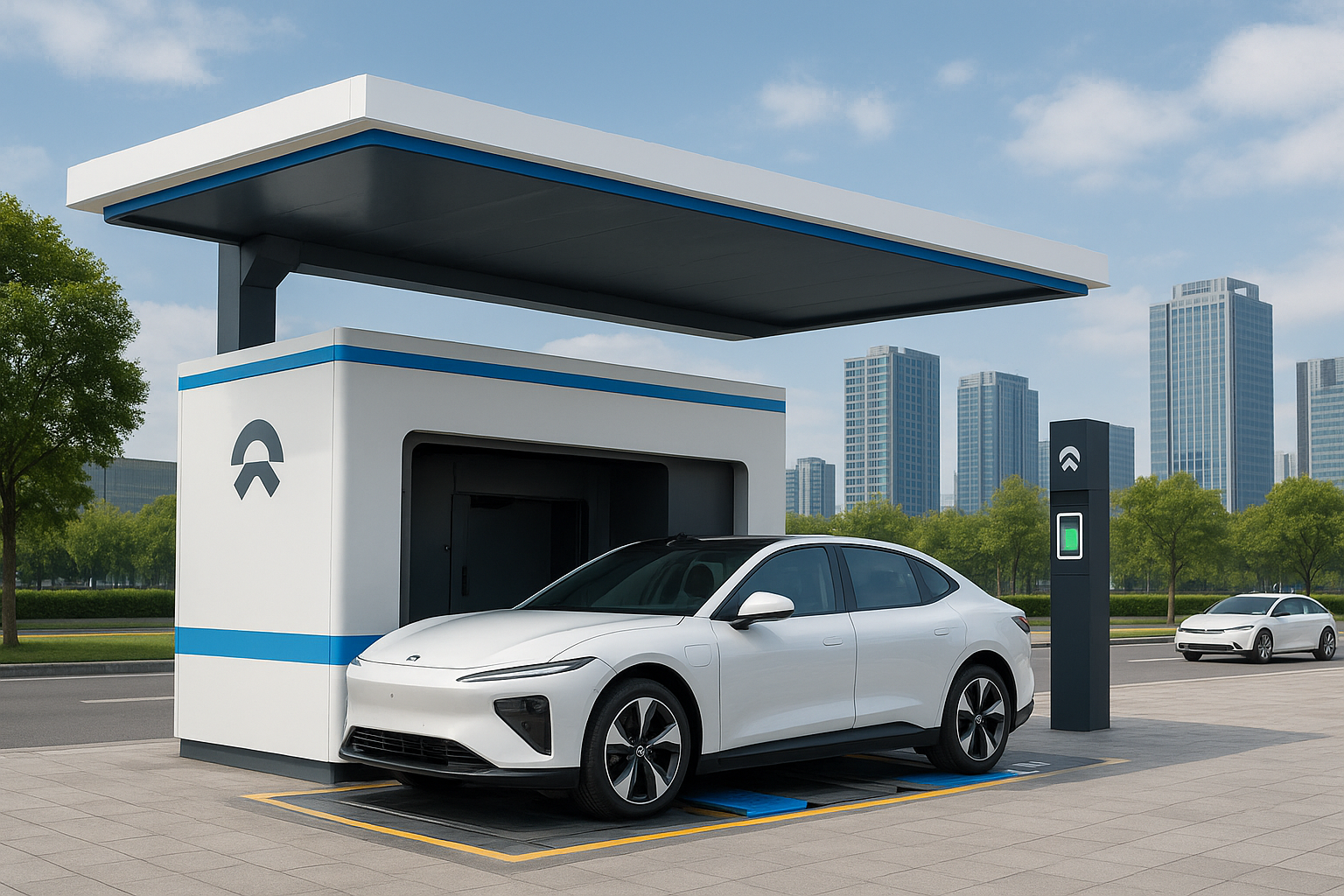
NIO targets 4,000 global stations by 2027, focusing on European expansion and select Middle Eastern markets where government policies support battery swapping infrastructure. You'll find the most reliable coverage if you drive primarily in tier-one Chinese cities or along established intercity routes. Coverage maps update monthly as new stations come online.
"Station availability dictates whether swapping works as your primary refueling method or serves as backup to home charging."
How to locate stations through NIO's app
The NIO mobile app displays all active swap stations with real-time availability data showing charged battery inventory and current wait times. You filter search results by distance, battery type compatibility, and station features like covered bays. The navigation system integrates swap stops directly into route planning algorithms, automatically calculating optimal station locations based on your destination and current battery charge level.
Final take
NIO battery swap technology demonstrates that automated battery exchanges work at commercial scale when you commit to the infrastructure and design vehicles specifically for swapping. The three-to-five-minute process matches traditional refueling speeds and eliminates range anxiety for drivers who have station access. Coverage continues expanding across China and into European markets, with over 2,300 active stations currently operating worldwide.
Your practical decision hinges on station density along your regular driving routes and whether subscription costs align with your monthly mileage. Frequent drivers benefit most from BaaS plans, while occasional users should stick with pay-per-swap pricing or traditional charging methods. The nio battery swap model proves battery exchange technology delivers on its core promise when proper infrastructure supports daily operations.
Wave-Vo applies this same quick-swap principle to watercraft with our electric jet boats that swap batteries in 10 seconds. Fast power exchanges eliminate downtime whether you're on highways or waterways.