
Whether you own a traditional jet ski or an electric watercraft like a Wave-Vo, protecting your investment with the right insurance matters. Farmers boat insurance is one option that consistently appears in conversations among boat owners looking for reliable coverage from a well-known provider.
But is Farmers actually the right fit for your watercraft? The answer depends on your specific needs, budget, and the type of vessel you're insuring. Farmers offers several coverage tiers and add-ons, though their policies come with both advantages and limitations worth understanding before you commit.
This guide breaks down everything you need to know about Farmers boat insurance in 2026, from coverage options and pricing to real customer reviews. By the end, you'll have a clear picture of whether Farmers deserves your business or if you should keep shopping around for a better match.
Why boat insurance matters in 2026
You don't legally need boat insurance in most states, but skipping coverage can leave you financially exposed in ways you might not anticipate. A single accident on the water can trigger medical bills, property damage claims, and legal fees that quickly exceed tens of thousands of dollars. Even if you're a careful operator, other boaters, swimmers, or unexpected weather conditions create risks you can't fully control.
Beyond liability concerns, watercraft prices have climbed steadily since 2020. If you've invested in a boat, jet ski, or electric watercraft, replacing it out of pocket after theft or a total loss could derail your finances. Many lenders also require proof of insurance if you financed your purchase, meaning coverage isn't optional in those cases.
"The average boat insurance claim in 2025 exceeded $12,000, according to industry data, a figure that continues climbing as repair costs and medical settlements increase."
Rising replacement costs and liability risks
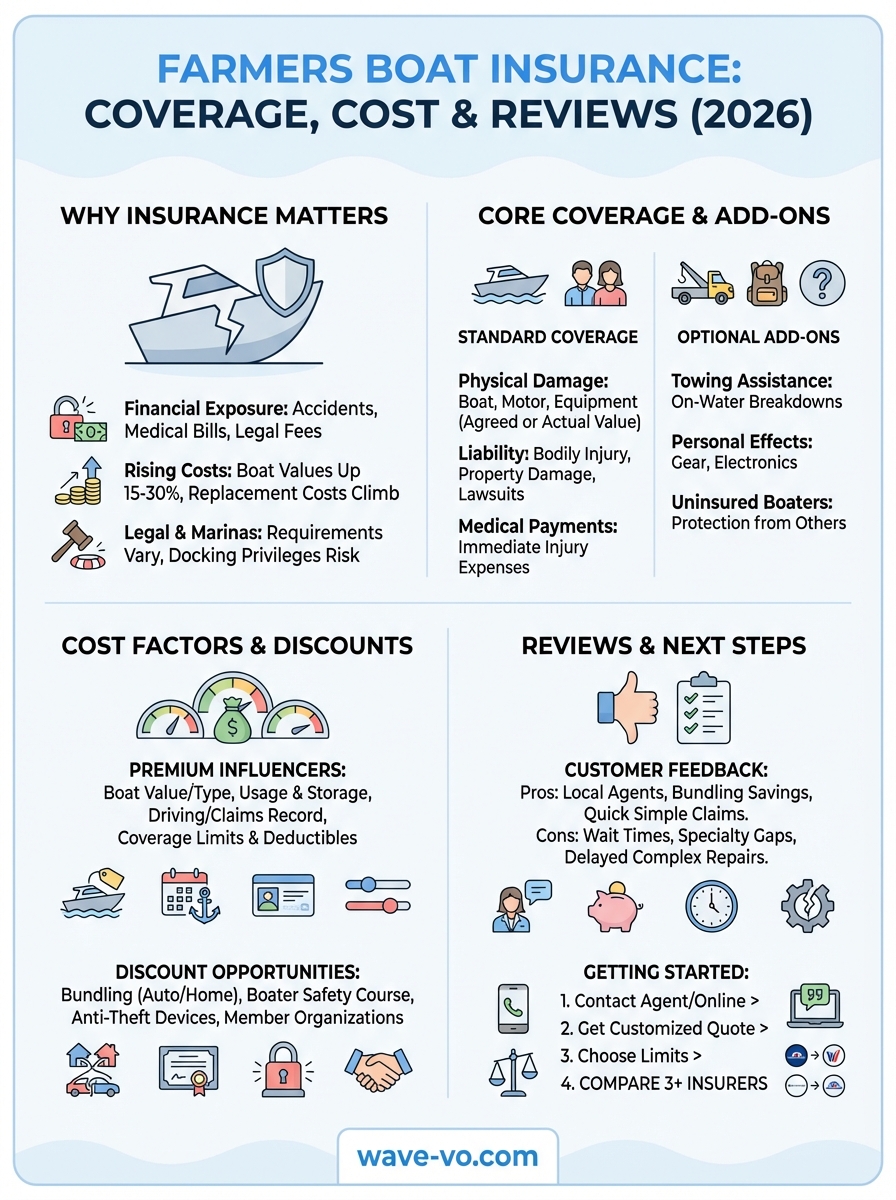
Boat values have increased between 15% and 30% over the past five years, depending on the type and model. This inflation means your watercraft is likely worth more than you paid for it, but it also means replacement costs will hit harder if you lack coverage. Liability exposure has grown too, with personal injury lawsuits becoming more common and settlement amounts rising across most states.
Legal requirements vary by location
Some states mandate boat insurance for specific vessel types or sizes, while others require it only if you're financing. Marinas and lakes also impose their own rules, sometimes refusing to grant you docking privileges without proof of coverage. Before you assume insurance is unnecessary, check your local regulations and any contracts tied to where you store or operate your boat.
What Farmers boat insurance covers
Farmers boat insurance includes several core coverage types that protect both your vessel and your wallet if something goes wrong on the water. The standard policy covers physical damage to your boat, liability if you injure someone or damage their property, and medical payments for injuries to you or your passengers. You can also add optional endorsements for items like towing assistance, personal effects, and uninsured boaters.
Physical damage protection
Your boat's hull, motor, and permanently attached equipment fall under physical damage coverage, which pays to repair or replace your watercraft after incidents like collisions, fires, theft, vandalism, or weather damage. Farmers typically offers two options: agreed value coverage, which pays a predetermined amount you and the insurer set upfront, or actual cash value coverage, which factors in depreciation at the time of loss.
"Agreed value policies prevent depreciation disputes during claims, making them the preferred choice for newer boats or those with specialty features."
Liability and medical payments
Liability coverage steps in when you're legally responsible for injuring another person or damaging their property while operating your boat. Farmers boat insurance includes bodily injury liability and property damage liability, both of which can protect you from lawsuits and settlement costs. Medical payments coverage also handles immediate medical expenses for you and your passengers, regardless of who caused the accident.
What affects cost and available discounts
Your farmers boat insurance premium depends on several measurable factors that insurers use to calculate risk. Understanding these elements helps you anticipate your costs and identify ways to lower your bill before you request a quote.
Factors that influence your premium
Farmers evaluates your boat's value, age, and type first, since expensive or high-performance vessels cost more to repair or replace. A $60,000 yacht carries a higher premium than a $10,000 fishing boat. Your usage patterns also matter, including how often you operate the boat, where you store it, and whether you keep it in saltwater or freshwater. Saltwater exposure accelerates corrosion and increases claim frequency.
Your driving record and claims history play a role too. Operators with past accidents or violations face steeper rates, while those with clean records qualify for better pricing. The coverage limits and deductible you choose directly impact your premium, with higher limits and lower deductibles pushing costs up.
"Choosing a $1,000 deductible instead of $500 can reduce your annual premium by 10% to 15% without sacrificing essential protection."
Discount opportunities
Farmers offers bundling discounts if you combine boat insurance with your auto or home policy. You can also qualify for reductions by completing a boater safety course, installing anti-theft devices, or being a member of certain boating organizations.
Reviews and common customer experiences
Real customer feedback reveals a mixed picture of Farmers boat insurance performance. While many policyholders appreciate the company's widespread agent network and bundling options, others report frustrations with claims processing speeds and coverage limitations. Understanding these patterns helps you set realistic expectations before committing to a policy.

What customers praise most
Policyholders consistently highlight Farmers' local agent accessibility as a major advantage, noting that face-to-face service makes policy adjustments and questions easier to handle. Customers also appreciate the bundling discounts available when combining boat coverage with existing auto or home policies, which can trim 10% to 20% off premiums. The claims process receives positive marks when straightforward incidents occur, with many reporting quick resolutions for theft or weather damage.
Common complaints and limitations
Farmers boat insurance faces criticism for longer wait times during complex claims involving disputes over liability or valuation. Some customers report difficulty reaching adjusters during peak boating season, leading to delayed repairs. Coverage gaps also frustrate owners of specialty watercraft or electric boats, who sometimes find that standard policies lack tailored protections for unique features or battery systems.
"Customer satisfaction ratings for Farmers boat insurance hover around 3.5 out of 5 stars across major review platforms, with response time as the most frequent complaint."
How to get a quote and pick the right limits
Getting a farmers boat insurance quote starts with contacting a local Farmers agent or visiting their website to enter basic information about your watercraft. You'll need your boat's make, model, year, length, and value ready, along with details about where you store it and how often you operate it. Farmers agents typically respond within 24 to 48 hours with a customized quote that reflects your specific situation.
Getting your quote from Farmers
You can request a quote through three main channels: calling Farmers directly, visiting a local agent's office, or filling out an online form. The online process takes approximately 10 to 15 minutes and requires information about your boat's physical characteristics, estimated annual usage, and desired coverage types. Agents often follow up with questions about optional endorsements like towing assistance or personal effects coverage before finalizing your quote.
Choosing coverage limits that fit
Your liability limits should reflect your net worth and potential exposure, not just the minimum amounts available. Most agents recommend carrying at least $300,000 in liability coverage for typical recreational boats, though higher limits make sense if you own property or have significant assets. Your physical damage coverage should match your boat's replacement cost rather than what you originally paid, especially if values have increased since your purchase.
"Underinsuring your boat by 20% can leave you covering thousands of dollars out of pocket after a total loss, even with a valid claim."
Next steps
Farmers boat insurance provides dependable coverage for traditional watercraft, but shopping around remains your smartest move before committing to any policy. Request quotes from at least three different insurers to identify the best combination of price, protection, and customer service for your specific vessel. Pay close attention to coverage gaps that might leave you financially exposed, particularly if you own specialty equipment, operate in saltwater, or store your boat in high-risk areas.
If you're considering alternatives to gas-powered boats, electric watercraft like Wave-Vo eliminate many traditional ownership headaches while delivering go-kart-style performance on the water. These portable electric jet boats require insurance just like conventional watercraft, but their simplified maintenance and compact design make them easier to store, transport, and protect. Whether you stick with traditional boats or explore electric options, securing the right insurance policy keeps you on the water without financial worry.