
Whether you just purchased a Wave-Vo electric jet boat or any other watercraft, understanding California DMV vessel registration is essential before you hit the water. California requires most motorized vessels to be registered with the Department of Motor Vehicles, and yes, that includes electric boats.
Getting your registration squared away means you can enjoy lakes, bays, and coastal waters without worrying about fines or legal complications. The process involves specific documentation, applicable fees, and renewal timelines that every boat owner needs to understand.
This guide walks you through the complete registration process, from eligibility requirements to the paperwork you'll need, fees you'll pay, and how to keep your registration current. By the end, you'll have a clear roadmap to legally operating your vessel in California waters.
What you need to know before you start
California requires most motorized vessels to be registered before their first use on state waters. The registration process typically takes 2 to 4 weeks from application submission to receiving your official documents, so plan ahead if you're eager to launch. You'll need to budget for registration fees that vary based on vessel length and whether you're applying for an initial registration or renewal.
Registration timeline and costs
Your california dmv vessel registration application goes through processing at a DMV field office or by mail, depending on your preference. Initial registration fees start at $20 for vessels under 16 feet, with larger boats costing more. You'll also pay a $5 quagga/zebra mussel fee and potentially other environmental charges. The entire process can be completed in person for immediate temporary registration, or by mail if you're willing to wait for processing.
Registration is valid for two years in California, so you won't need to renew annually.
What vessels qualify
Any boat with a motor of any type needs registration, including electric motors like those on Wave-Vo jet boats. Sailboats under 8 feet and certain non-motorized vessels may be exempt, but if your vessel has any propulsion system beyond human power, assume you need registration. Personal watercraft, jet boats, fishing boats, and recreational vessels all fall under DMV jurisdiction rather than Coast Guard documentation unless they exceed certain commercial thresholds.
The DMV distinguishes between California-purchased vessels and out-of-state transfers, which affects your documentation requirements. If you bought your vessel from a California dealer, the process is simpler because dealers often handle initial paperwork. Used boats or vessels from private sellers require additional proof of ownership and potentially a hull inspection.
Step 1. Confirm your vessel needs DMV registration
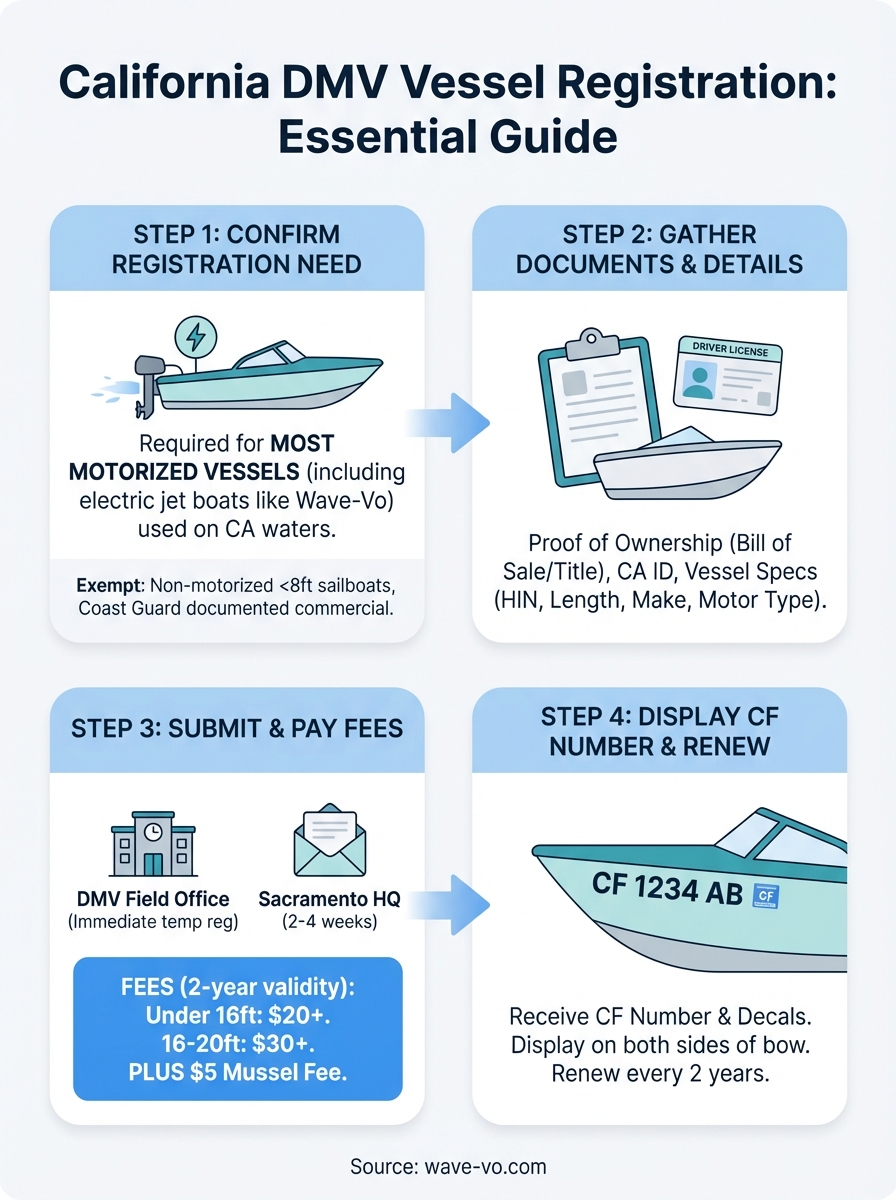
You need to determine if your boat falls under California's registration requirements before starting the application process. California law requires registration for any vessel equipped with a motor or engine, regardless of size or horsepower. This includes electric motors, so your Wave-Vo jet boat definitely qualifies.
Vessels that require registration
Any watercraft with propulsion beyond oars or paddles needs california dmv vessel registration. This covers motorboats, sailboats with auxiliary motors, personal watercraft, jet skis, electric boats, and even inflatable boats with small trolling motors. The motor size doesn't matter, a 15kW electric motor and a 2-horsepower gas engine both trigger the registration requirement.
If your vessel has any type of motor attached, assume you need registration until proven otherwise.
Exemptions you should know
Certain vessels don't require DMV registration in California. Sailboats under 8 feet long without motors are exempt, as are vessels documented by the U.S. Coast Guard for commercial purposes. Non-motorized canoes, kayaks, paddleboards, and rowboats also skip registration. Ships' lifeboats and military vessels operate under different regulations entirely.
Your vessel's previous registration status from another state doesn't exempt you. When you bring a boat into California for more than 90 consecutive days, you must register it with the DMV regardless of existing out-of-state paperwork.
Step 2. Gather documents and vessel details
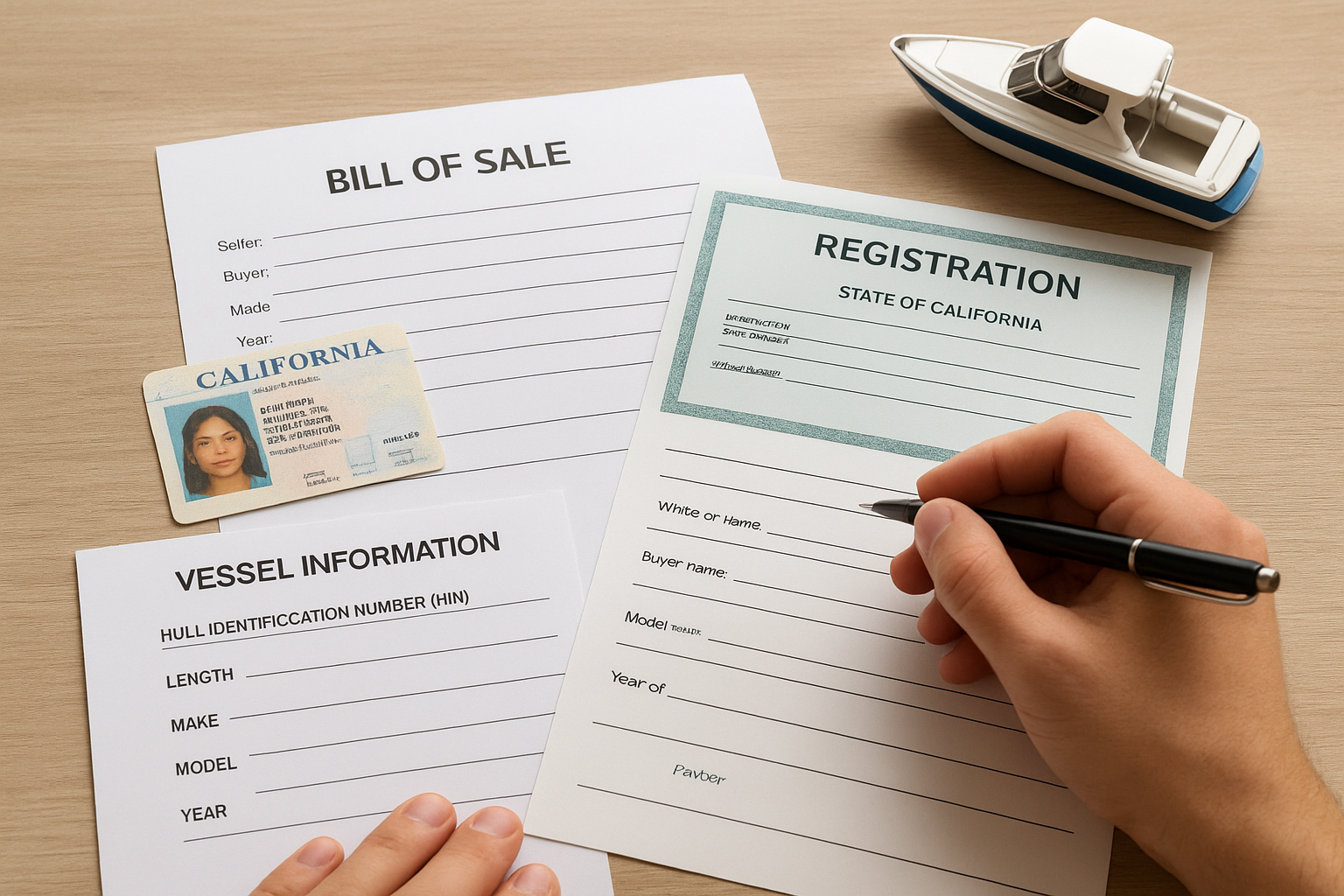
Your california dmv vessel registration requires specific documents and vessel information before you can complete the application. Collecting everything upfront saves you from delays or rejected applications that force you to restart the process. The DMV needs proof of ownership, identification, and detailed vessel specifications to issue your registration.
Required documentation checklist
You must provide proof of ownership through a bill of sale, manufacturer's certificate of origin, or previous registration certificate. Your California driver's license or ID card serves as identification verification. If you purchased from a dealer, bring the signed purchase agreement and any transfer documents they provided.
For used vessels or private sales, you need a properly signed title or notarized bill of sale that includes the purchase price, date, and both buyer and seller signatures. Out-of-state transfers require your previous state's registration showing you as the owner.
Missing documentation is the most common reason for registration delays, so verify you have everything before submitting.
Vessel information to record
Write down your vessel's hull identification number (HIN), typically found on the transom's starboard side. You need the exact length, make, model, and year of manufacture. For Wave-Vo boats, this information appears on the manufacturer's documentation and the hull itself. Record your motor specifications including type (electric, gas, diesel), horsepower, and serial number if visible.
Step 3. Submit your application and pay fees
You can submit your california dmv vessel registration application through two methods: in person at a DMV field office or by mail to the Sacramento headquarters. In-person submission gives you immediate temporary registration that's valid for 90 days while your permanent documents process. Mail applications take longer but work perfectly if you're not in a rush to launch.
Submit at a DMV office
Visit any DMV field office that processes vessel registrations with your completed application, documents, and payment. The clerk reviews your paperwork on the spot and catches any errors immediately, saving you from resubmission delays. You walk out with temporary registration and your CF number, allowing you to legally operate your boat that same day.
Mail your application
Send your completed Application for Registration (Form REG 343) to the DMV Vessel Unit at PO Box 942869, Sacramento, CA 94269-0001. Include all required documents and a check or money order payable to the Department of Motor Vehicles. Processing takes 2 to 4 weeks, so don't operate your vessel until you receive confirmation.
Mail applicants cannot legally operate their vessels until the DMV processes the registration and issues a CF number.
Fee breakdown
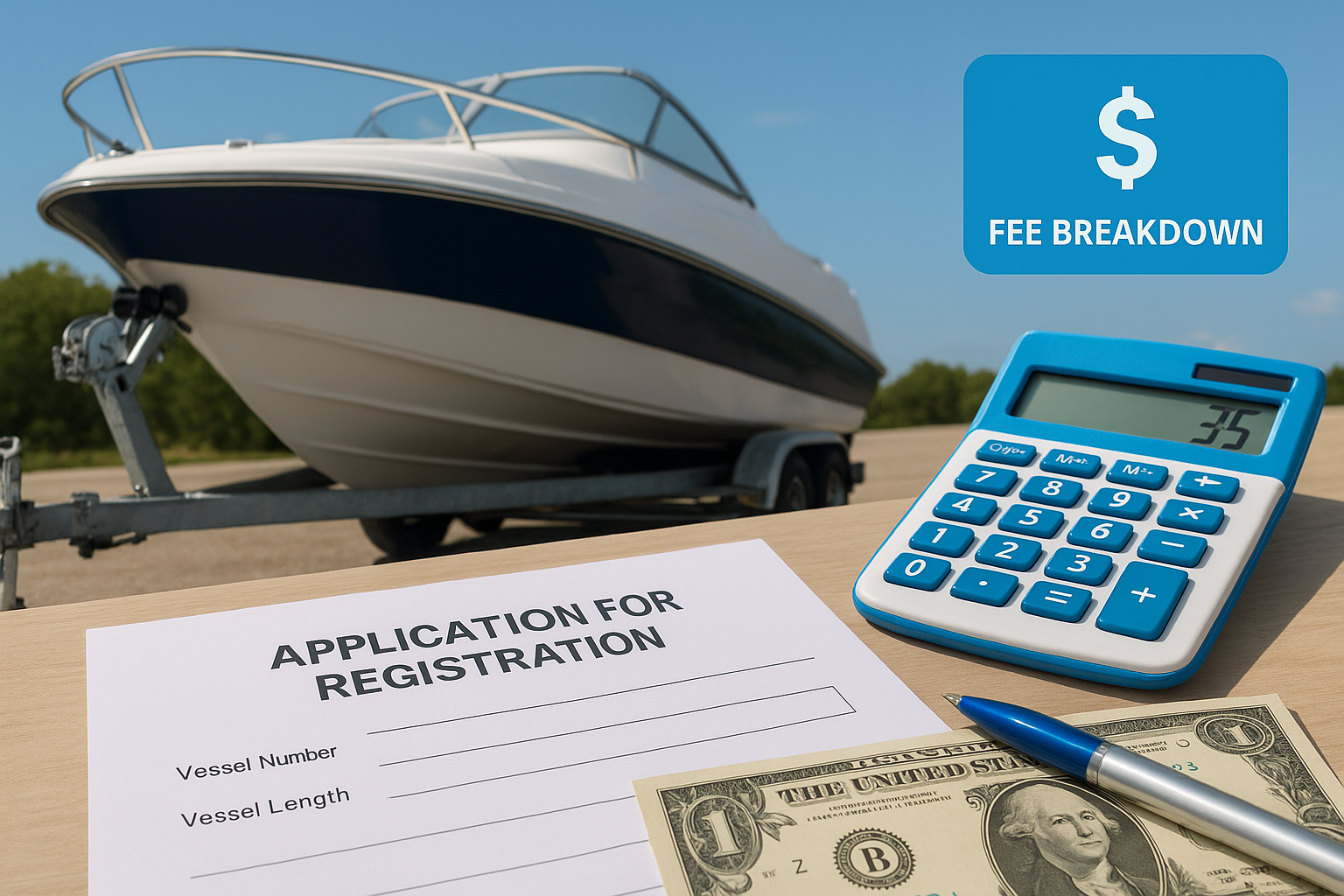
Your registration fees depend on vessel length. Boats under 16 feet cost $20, vessels 16 to 20 feet run $30, and larger boats pay more. Add a mandatory $5 quagga/zebra mussel fee regardless of size.
After you register: CF numbers, renewal, and compliance
Once your california dmv vessel registration processes, you receive a CF (California) number and registration decals that must be displayed on your vessel. Your CF number follows a specific format: CF followed by four digits, then a space, then two letters (example: CF 1234 AB). This number stays with your vessel for its lifetime in California, even through ownership changes.
Display your CF number correctly
You must paint or permanently attach your CF number on both sides of the bow in block letters at least three inches tall. The letters need to read left to right and contrast with the hull color for clear visibility. Your registration decals go within six inches of the CF number on the starboard (right) side. Wave-Vo's smooth hull surface makes vinyl lettering an easy, removable option if you want to avoid permanent paint.
Incorrectly displayed CF numbers can result in fines starting at $100, even if your registration is current.
Renewal deadlines and process
Your registration expires two years from the issue date, not on a specific calendar date. The DMV mails renewal notices approximately 90 days before expiration to your address on file. Renew online at dmv.ca.gov, by mail, or in person before your expiration date to avoid late fees and potential citations while operating your vessel. Keep your address updated with the DMV to ensure you receive renewal notifications on time.
You're ready to launch
You've completed the california dmv vessel registration process and received your CF number, so your vessel is legally ready for California waters. The paperwork and fees you submitted protect you from fines and ensure your boat operates within state regulations. Display your CF number correctly, keep your registration documents onboard, and mark your renewal date on your calendar to avoid expiration headaches.
Your Wave-Vo electric jet boat offers the unique advantage of trailer-free transport and quick launch times, making spontaneous lake trips easier than traditional watercraft. With registration handled, you can focus on enjoying the water without the maintenance hassles of gas engines or complex towing logistics that come with conventional boats. Explore Wave-Vo's electric jet boats to experience the freedom of grab-and-go boating that fits inside your SUV and launches in minutes, combining California compliance with cutting-edge electric performance.